
Case Study
Red Cross LA Annual Meeting Evolution
Reframing a pandemic-era annual meeting into a cinematic institutional narrative that elevated stakeholder engagement and internal pride.
“I’ve never had a doubt that if Hasnain was leading something, it was going to be exceptional. I didn’t have to worry about the outcome.”
Marium Mohiuddin
Communications Director, American Red Cross LA Region

Context
During COVID, the American Red Cross LA Region faced a familiar but consequential challenge. The Annual Meeting, one of the organization’s key stakeholder moments, had historically relied on department leaders delivering updates supported by slides and voiceover.
With the region operating under heightened public demand and volunteer reliance, leadership sought to elevate the experience for a fully virtual audience that included board members, donors, volunteers, and staff. The goal was not simply to inform, but to convey the scale, urgency, and human impact of the organization’s work across the nation’s second largest regions.
At the same time, the project carried real institutional risk: a new CEO, compressed timelines, pandemic constraints, and a modest production budget.
Strategic Insight
The meeting needed to feel less like an update and more like a story worthy of the organization’s frontline reality.
The opportunity was not merely to improve production quality, but to fundamentally shift the Annual Meeting from departmental reporting into a unified narrative experience.
To resonate with a virtual audience, the story needed to:
Foreground the people doing the work
Reflect the geographic and community diversity of Los Angeles
Move beyond internal reporting toward external credibility
And create an emotionally coherent viewing experience
Before vs After
Before
Department heads reading updates over slides
Primarily internal reporting tone
Limited visual energy and static formats
Leadership voices only
Fragmented departmental segments
Instituonal
Shift
After
Cinematic, story-driven institutional narrative
Audience-centered virtual experience
Location-based, high-production storytelling
Volunteers and frontline staff featured
Unified regional story arc
Approach
I led the narrative and production strategy for a complete reimagining of the Annual Meeting experience. Key elements included:
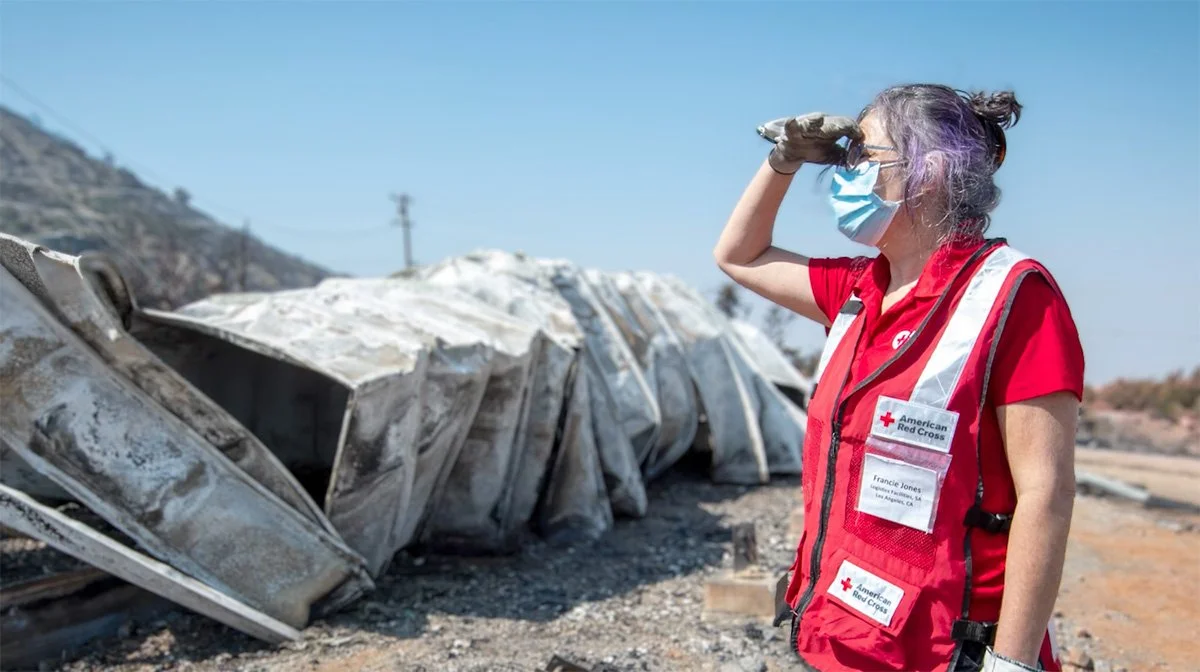
Introduced the region’s first off-site, cinematic production model
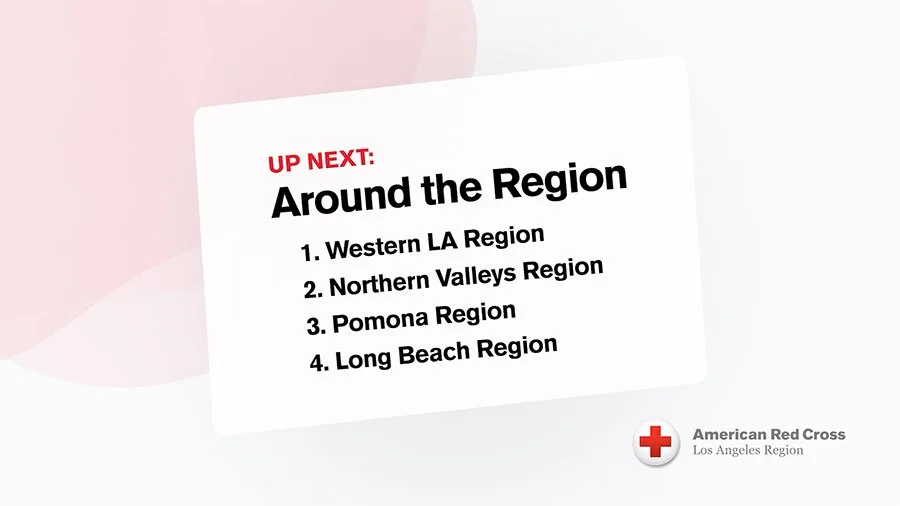
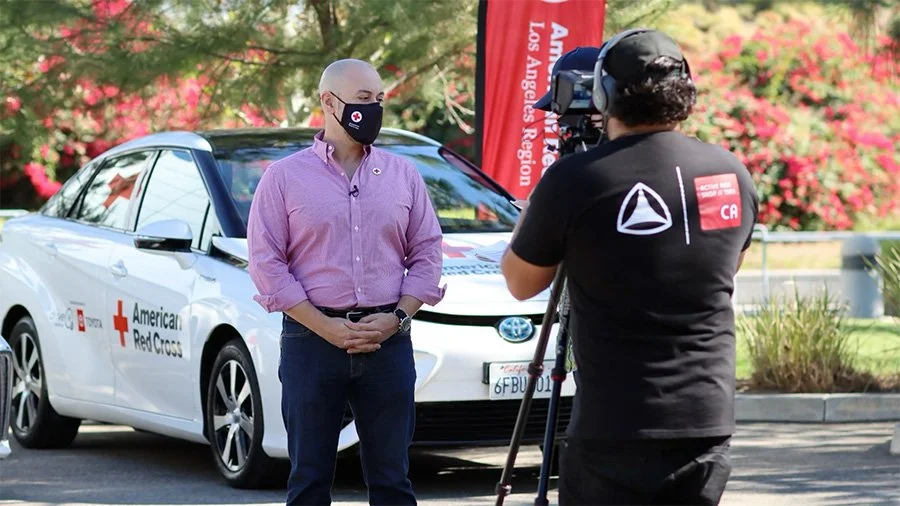
Structured the program around a narrative arc spanning 13 departments and 4 regions
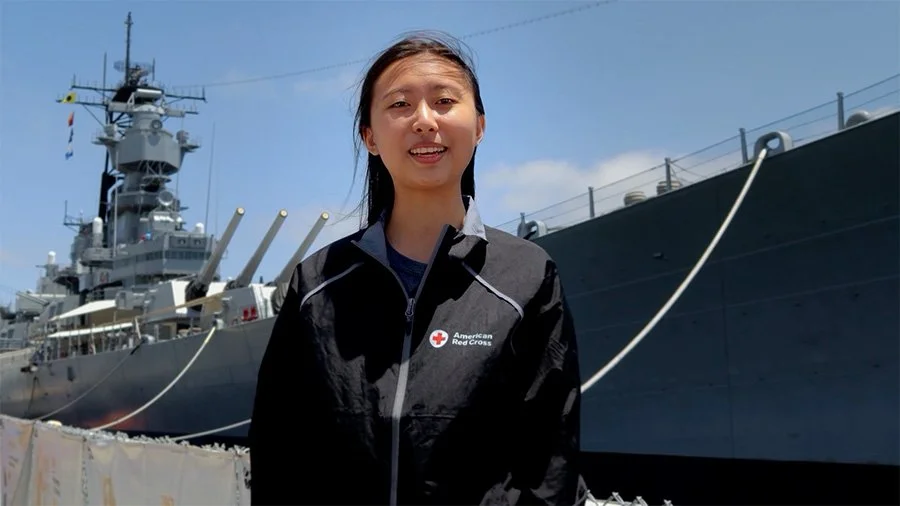
Reframed presenters to include frontline volunteers/staff, celebrating the nearly 80% volunteer workforce
Delivered an 80-minute program with an $8,000 production budget in two months
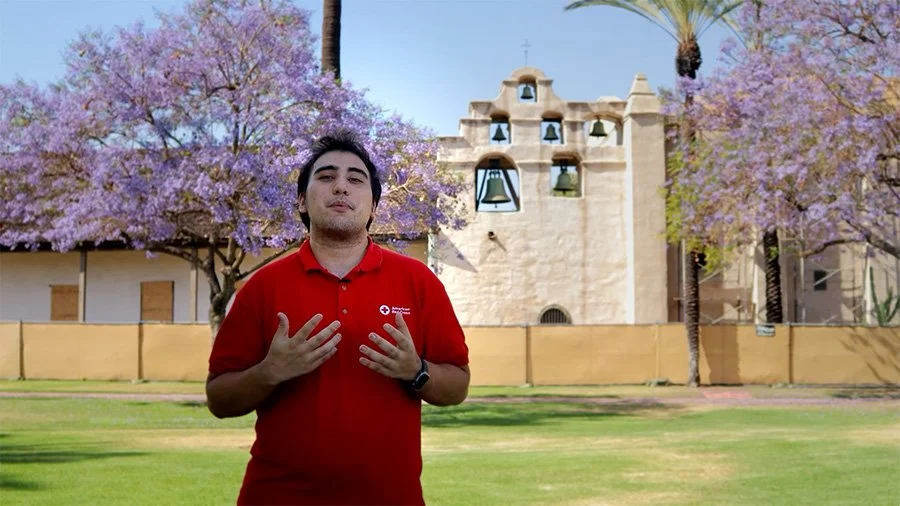
Used geographically meaningful locations across Los Angeles to reinforce regional scale and diversity

Directed a volunteer-driven team of videographers, writers, and designers under a compressed timeline
Measurable Impact
The Annual Meeting was a stakeholder engagement rather than a direct-response campaign. The qualitative and leadership response signaled clear success.
Executive leadership described the annual meeting as one of the most compelling the region had produced
Board members and senior stakeholders responded strongly to the elevated storytelling approach
Staff and volunteers reported increased pride in seeing frontline work and community impact represented cinematically
The production established a new internal benchmark for future regional storytelling
Leadership Scope
This work required navigating significant operational and institutional complexity.
Advised communications leadership on the strategic narrative shift
Built trust around a higher-risk production approach with new executive leadership
Coordinated multi-location filming across Los Angeles County
Managed permissions, logistics, and pandemic-era production constraints
Directed and aligned a Red Cross volunteer team across scriptwriters, speakers, videographers, and editors
Balanced cinematic ambition with strict budget and timeline discipline
the goal was not just to deliver a polished program, but a credible institutional moment leadership could stand behind.
Strategic Significance
This project demonstrated how narrative strategy, when paired with disciplined execution, can transform routine institutional moments into high-credibility storytelling experiences.
The work illustrates a repeatable model for mission-driven organizations seeking to:
modernize legacy formats
elevate stakeholder confidence
strengthen internal culture and pride
and communicate frontline impact with greater clarity and emotional resonance